Showing posts with label pc. Show all posts

Thursday, 28 June 2012

Game Of Thrones

Game of Thrones is the title of a single-player role-playing video game developed by Cyanide Studios and published by ATLUS in North America and Focus Home Interactive in Europe. It is available on PC, PlayStation 3 and Xbox 360. Originally a game based solely on the A Song of Ice and Fire novels by George R. R. Martin, Cyanide reached a deal with HBO to use art assets and voice actors from the TV series to make it a licensed product. It was released in the United States on 15 May 2012, and Prima Games released a strategy guide for it on the same day.

Premise

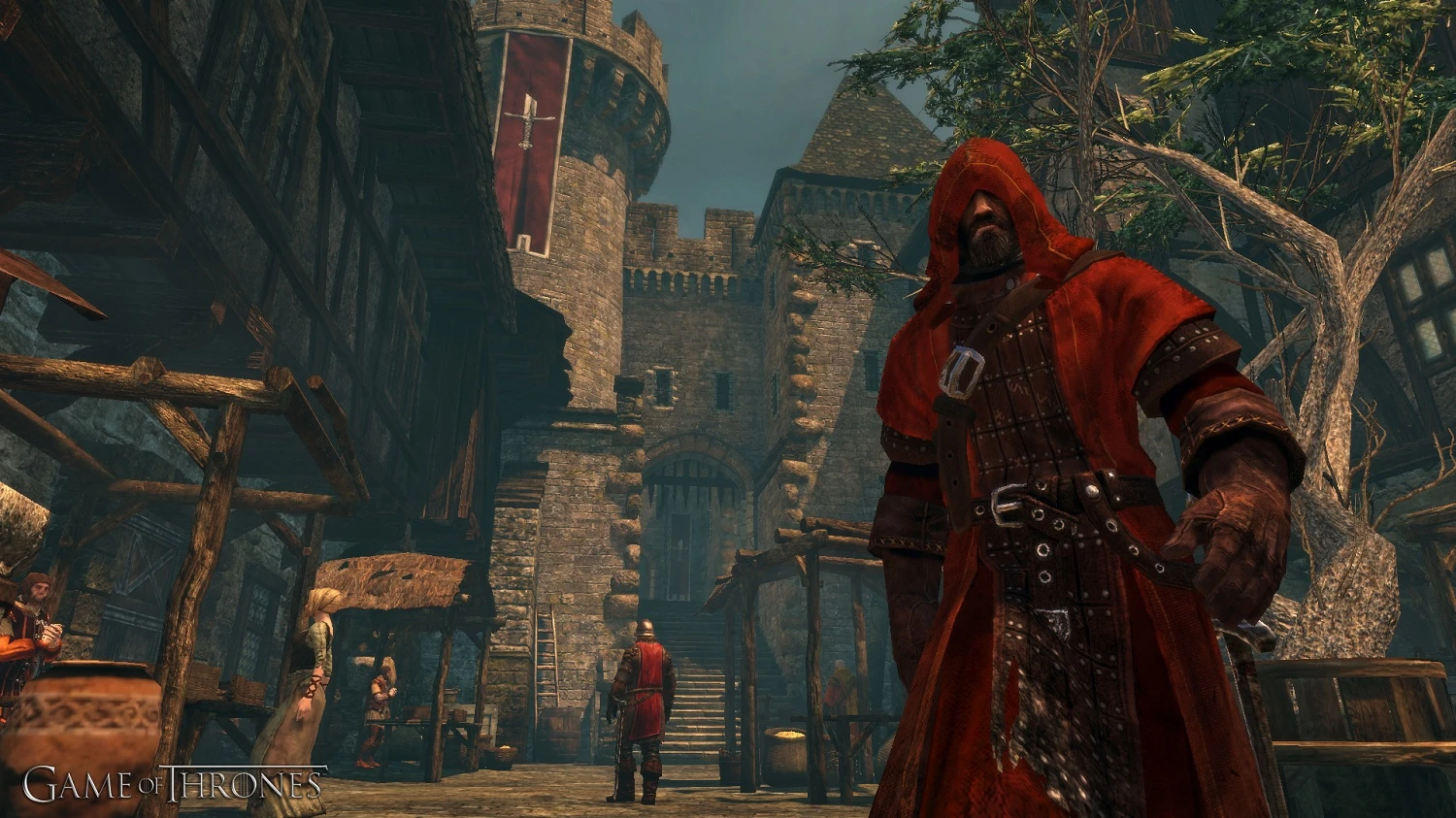
A publicity image of the game.
The game follows two characters through events in Westeros, roughly occurring simultaneously with the events of the first season. The first character is Mors Westford, a sworn brother of the Night's Watch who is serving on the Wall with his faithful dog. The second is Alester Sarwyck, a nobleman from the south who has spent years in exile in Essos and become a priest of R'hllor, the Lord of Light. He is summoned home to Riverspring by the death of his father and an attempt by one of his bastards to claim the castle. Whilst their stories are separated by thousands of miles, they will eventually have an impact on one another.
Characters known to appear in the computer game include Cersei Lannister, Varys and Lord Commander Jeor Mormont, voiced by their respective television actors. Locations will include Castle Black and King's Landing.

Development

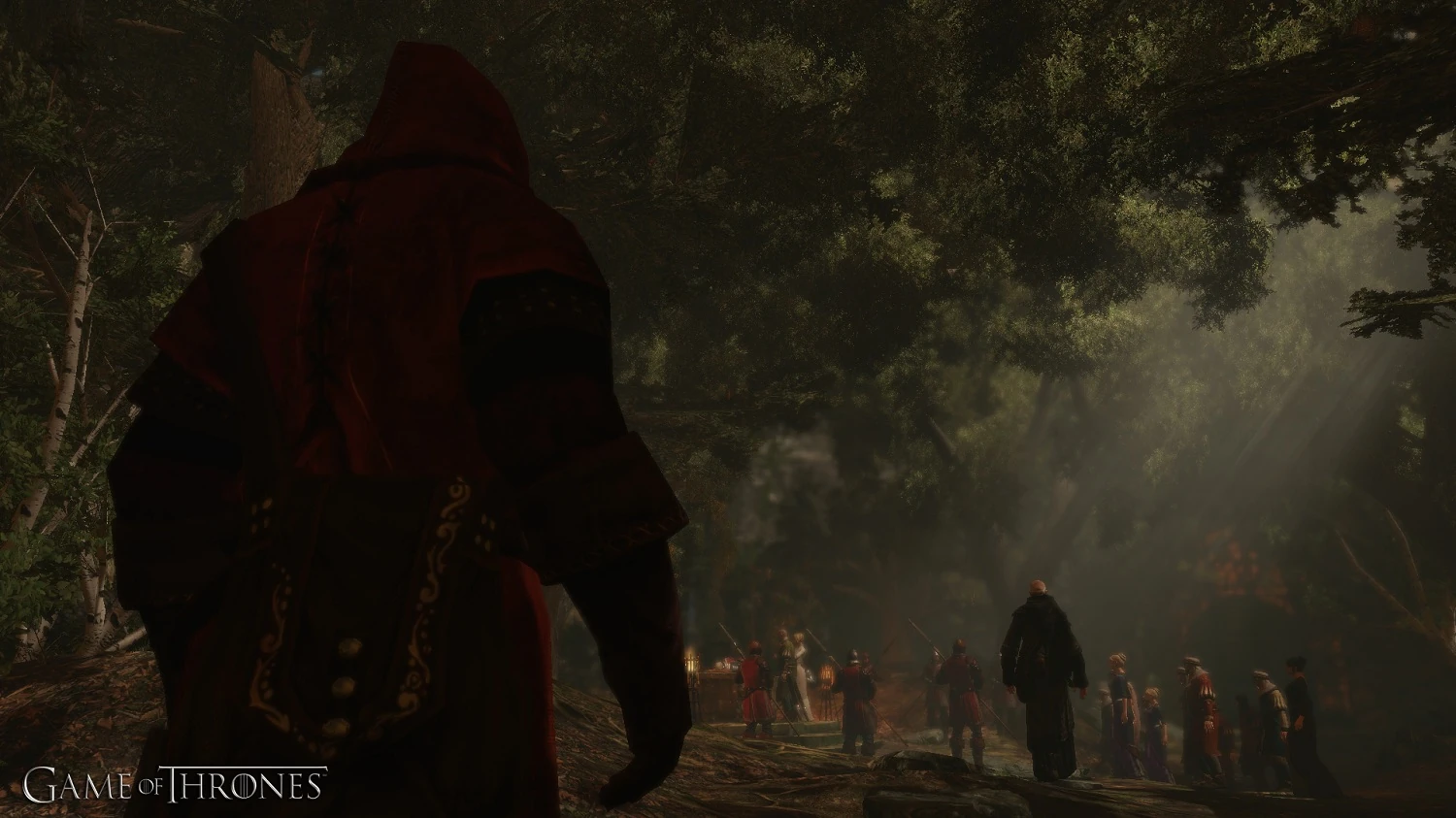
A publicity image of the game.
Cyanide Studios bought development rights to the Song of Ice and Fire novels in 2007. Initially the deal was only between Martin and Cyanide, with no involvement from HBO. Cyanide announced they would be simultaneously developing two games, an RPG and a strategy game entitled A Game of Thrones: Genesis. The strategy game, with no involvement from HBO, was released in September 2011 to largely lukewarm and negative reviews. Shortly before this, Cyanide and HBO announced that they had reached an agreement for the RPG to be released under a license allowing Cyanide to use HBO art assets, the logo from the TV series and some of the actors as well. This required some rewriting of materials already completed for the game.
George R. R. Martin has acted as consultant on the game's script, whilst Cyanide has also been advised on the setting and history of Westeros by Elio Garcia and Linda Antonsson of the Westeros.org fan site, co-writers of the forthcoming World of Ice and Fire companion book.

Wednesday, 30 May 2012

Assassin's Creed: Revelations

Assassins Creed Revelations Cover.jpgAssassin's Creed: Revelations is a historical action-adventure open world stealth video game developed and published by Ubisoft. It was released for PlayStation 3 and Xbox 360 in November 2011, and for Microsoft Windows in December 2011. It is the fourth major installment in the Assassin's Creed series and the last chapter in the 'Ezio Trilogy'. The game is a direct sequel to Assassin's Creed: Brotherhood, with the three protagonists from the previous games Ezio Auditore da Firenze, Altaïr ibn La-Ahad, and Desmond Miles returning as the main protagonists.

Synopsis

Setting

Revelations features all three of the series' major characters so far: Desmond Miles, Altaïr ibn La'Ahad and Ezio Auditore da Firenze. The main part of the story takes Ezio to Constantinople in 1511 AD, consisting of four districts: Constantin, Beyazid, Imperial, and Galata; Cappadocia during the rise of the Ottoman Empire, part of which is a completely underground city populated solely by Templars;and Masyaf, where the old Assassins' stronghold is located (featured in the first Assassin's Creed game), to which Ezio travels at the beginning of the game. He discovers Altaïr has sealed within the fortress an ancient artifact that is said to be a powerful weapon which could end the Templar-Assassin War forever, and had the keys hidden in Constantinople. Ezio uses these relics of the "First Civilization" that hold memories of Altaïr to relive Altaïr's experiences, during which players control Altaïr.
The game continues Desmond's story in the present day, following the events of Brotherhood, where he is trapped in the Animus 2.0, in a comatose state, in which he has found a safe mode known as "the Black Room". Here, Desmond must find a "synch nexus", a key memory that links him with Altaïr and Ezio, to reintegrate his splintered subconscious and awaken from his coma. While in game, Ezio meets a variety of historical characters, including: Manuel Palaiologos, an heir to the now-lost Byzantine Empire; Byzantine Templars lurking in the shadows of Constantinople; and Prince Suleiman, a man who will one day become one of the Ottoman Empire's greatest Sultans; and his uncle, Prince Ahmet.

Plot

Present-day protagonist Desmond Miles has fallen into a coma from the events of the previous game. To save Desmond's mind, he is placed in a specialized area of the Animus called the Black Room. Upon awakening inside the Animus, in a location called Animus Island, he meets the consciousness of Subject Sixteen, who occupied the Animus before him. Sixteen explains that Desmond's mind is broken, and the only way for him to repair it is to play through his ancestors' stories until there is nothing left for them to show Desmond, at which point the Animus can separate Desmond from Ezio and Altaïr, and awaken Desmond from his coma.
Desmond enters Animus Island's memory portal, which places him back in the perspective of Ezio Auditore. Ezio has traveled to the former Assassin's fortress in Masyaf to unlock secrets Altaïr had previously discovered, and find the true purpose of the Assassins. Upon arriving, he finds Masyaf taken by the Templars, who mark him for death. Ezio escapes to the bowels of the castle, where he discovers the entrance to Altaïr's library.He learns that five disc-like "keys" are required to unlock the door; that the Templars have one underneath the Ottoman Sultan's palace; and the rest lie hidden in Constantinople, part of the Ottoman Empire.He travels there and is greeted by Yusuf Tazim, leader of the Turkish Assassin Order,and befriends a young student named Suleiman. Ezio learns that the keys were hidden in the city by Niccoló Polo. While searching for the old Polo trading post, Ezio encounters and befriends Sofia Sartor, a young Italian traveler and book collector, and eventually falls in love with her. Ezio discovers the locations of the remaining keys with Sofia's help, all the while keeping his intentions, growing feelings and position a secret from her.
Meanwhile, Constantinople is in chaos due to conflicts between Prince Ahmet and his brother Selim, who are quarreling over who will inherit the Sultanate. Caught in the middle of the conflict, Suleiman reveals to Ezio that he is an Ottoman prince, and that he suspects the Templars are behind the feud. Ezio uncovers evidence that Manuel Palaiologos, with Templar support, is attempting to raise an army to overthrow the Ottomans and reestablish the Byzantine Empire. Ezio kills Manuel and recovers the final key,only to discover that Ahmet is the true mastermind of the Templar plot to open Altaïr's library.
During these events, Ezio uses the keys in his possession to witness Altaïr's life after the events depicted in the first game. After killing Al-Mualim, Altaïr took possession of the Apple of Eden and assumed leadership of the Assassins. One of the Assassins, Abbas, did not support Altaïr due to past events, and for killing Al Mualim. When Altaïr and his wife Maria left Masyaf for 10 years to repel the Mongol invasion, Abbas staged a coup d'etat, seizing control of the Assassins and executing Altaïr's youngest son Sef. Altaïr sought revenge; but as Maria tried to stop him, Altaïr's rage was felt by the Apple of Eden and killed Maria. Altaïr was forced to flee with his elder son, Darim, and went into self-imposed exile for 20 years. Altaïr finally returned to Masyaf, killed Abbas, then took his rightful place as the Assassins' leader. In the process, Altaïr told the dying Abbas the truth of the latter's father's death.Years later, an aged Altaïr encodes his memories on the five keys Ezio would find, entrusting them to Niccoló.
In Constantinople, Ezio discovers that Ahmet has killed Yusuf and kidnapped Sofia, demanding the keys in exchange for her life. Ezio agrees, but immediately gives chase upon ensuring Sofia's safety. He recovers the keys, but before he can deal with Ahmet, Selim arrives with his armies and executes Ahmet himself, after saying that their father "made his choice." Due to his son Suleiman's endorsement, Selim has Ezio leave Constantinople, warning him never to return again. After completing this memory, the Animus begins to delete excess data—including Animus Island. Sixteen sacrifices himself to prevent Desmond from being deleted by the Animus.
Ezio and Sofia return to Masyaf, where Ezio uses the keys to unlock Altaïr's library. He finds it empty except for Altaïr's skeleton and a sixth key. He discovers that the library was not meant to hold books—rather, it was a vault meant to house Altaïr's Apple of Eden. Through the key, Ezio learns that Altaïr had sealed himself inside to preserve its secret from the Templars. Ezio leaves this Apple in the library, saying "I have seen enough for one life."  He then begins talking directly to Desmond, not knowing exactly who (or where) he is, but knowing that he is watching. He tells Desmond of his intention to retire from the Assassins, believing he has served his purpose. He expresses hope that Desmond will be able to find answers to the questions he and Altaïr had worked so hard to uncover.
Suddenly, Desmond is approached by Jupiter, a member of the First Civilization. He explains that the First Civilization had built numerous vaults to study methods to save the planet from destruction. All of the data collected was transmitted to a central vault, where the data was tested. None of the methods were effective, however, and they failed to stop the solar flare from destroying their civilization. Jupiter tells Desmond that he has the power to save the planet from a second solar flare, showing him the location of the central vault. Desmond wakes up from his coma and finds Rebecca, Shaun and his father William Miles standing with him. He tells them that he knows what to do as the Central vault located underground activates.

Multiplayer plot

The multiplayer aspect has its own plot from the Templar perspective. After training to become a Master Templar and being allowed into the Abstergo inner sanctum, the player is implanted with a tracker to ensure his/her trustworthiness. It is implied that Daniel Cross (Subject 4) is a member of the Templar inner sanctum. After reaching level 50 in the multiplayer, the player is dubbed an active agent, and assigned the task of retrieving the current Assassin Order Mentor, William Miles.

Gameplay


The main protagonist, Ezio, can use the hookblade to access ziplines across the environments. The hookblade is one of the new features introduced in Revelations.
The game follows the series' standard open world gameplay in the Ezio and Altaïr Sequences, where the game's main story takes place. New gameplay additions include an item called the "hookblade", which can be used to zipline across the city or grab enemies to yank them in for a combo attack. The hookblade reportedly speeds up navigation by around 30 percent. Along with the hookblade, Ezio also has around 150 different bomb variations at his disposal, which are to be crafted. The game features new "Desmond Sequences", "Dali-esque" first-person platforming missions in a radical departure for the series.These "Desmond Sequences" can only be unlocked by collecting a certain amount of Data Fragments hidden throughout Constantinople. Data Fragments are a new type of collectible in Revelations, replacing the Borgia Flags of previous games in the series.
Also added and expanded are seizing districts of the city from the Templars. While capturing a district is very similar to Brotherhood, the Templars will attempt to recapture districts, which Ezio must defend using a "tower defense" minigame, where he controls a group of Assassins from rooftops against several waves of Templar soldiers and siege equipment. Similar to Brotherhood, initiates can be sent on missions to other regions, eventually wresting control from the Templars, and then using the city to produce a stream of income and new Assassin recruits. The game is playable in full 3D across three platforms: PlayStation 3, PC, and Xbox 360, with the console versions supporting both stereoscopic 3D mode for 3D HDTVs and for 2D HDTVs. All Revelations gameplay and cinematics have S3D support.

Multiplayer

Multiplayer gameplay also makes a return in Revelations. The mode expands the basics of online modes from Brotherhood with new characters and locations. Players are able to customize their characters' appearance and weapons, as well as start a guild and create its unique coat of arms. Matchmaking and game interface are also improved. Ubisoft says that while the component is returning, they're putting greater focus towards the narrative, as it's the heart of the franchise. As players level up in the multiplayer game, they move up in their Abstergo Templar rank and gain access to more information about the company.
New multiplayer modes are added to the already existing modes, including "story-oriented quests", as well as a much requested Capture the Flag mode. Some multiplayer maps are based in the island of Rhodes.Among the new additions is a new multiplayer mode - Deathmatch - which differs from the previous multiplayer gameplay in that there is no compass pointing toward your assigned target, rather, there is a box in the top right of the screen where your current target is displayed, which glows blue when you enter the line of sight of your target. There is also Simple Deathmatch, which also removes the abilities and perks from the players.
The multiplayer function is protected by the Uplay Passport system on PlayStation 3 and Xbox 360,which requires a code for access. Codes are included in all new copies of the game, but are tied to a single Uplay account. This means that players who purchased their copy second hand will need to purchase a new code to access the multiplayer. Uplay players can buy a new Passport code online or activate a free trial.

Medal of Honor

Medal of Honor logo.jpgMedal of Honor (MoH) is the name of a series of first-person shooter games set in World War II, with an October 2010 reboot based on the conflicts of present day Afghanistan. The first game was developed by DreamWorks Interactive (now known as Danger Close) and published by Electronic Arts in 1999 for the PlayStation game console. Medal of Honor spawned a series of follow-up games including multiple expansions spanning various console platforms and the PC and Mac.

History

The Medal of Honor series began in 1999 with Medal of Honor. It was released on PlayStation on November 11, 1999 by film director and producer Steven Spielberg.
Medal of Honor: Underground, the second game in the series, was released for the PlayStation and GameBoy Advance in 2000.
Medal of Honor: Allied Assault, the third game in the series, was released for the PC in January 2002. It also had Extension Packs titled Spearhead (released in 2002) and Breakthrough (released in 2003).
Medal of Honor: Frontline, the fourth game in the series, was released for the PlayStation 2 in May 2002, and for the Nintendo GameCube and Xbox in November 2002. It was later remastered in High-Def and released in 2010 with the PlayStation 3 version of Medal of Honor (2010).
Medal of Honor: Rising Sun, the fifth game in the series, was released for the PlayStation 2, Xbox and Nintendo GameCube in 2003. The game was supposed to have a sequel, but it was cancelled due to the game's mix reviews.
Medal of Honor: Infiltrator, the sixth game in the series, was released for the GameBoy Advance in 2003.
Medal of Honor: Pacific Assault, the seventh game in the series, was released for the PC in 2004.
Medal of Honor: European Assault, the eighth game in the series, was released for the PlayStation 2, Xbox and Nintendo GameCube in 2005.
Medal of Honor: Heroes, the ninth game in the series, was released for the PlayStation Portable in 2006.
Medal of Honor: Vanguard, the tenth game in the series, was released for the PlayStation 2 and Nintendo Wii in 2007. Also that year, Medal of Honor: Airborne, the eleventh game in the series, was released for the PlayStation 3, Xbox 360 and PC.
Medal of Honor: Heroes 2, the twelfth game in the series, was released for the Nintendo Wii and PlayStation Portable in 2007 also.
Medal of Honor (2010), the thirteenth game in the series was announced in 2008 as Medal of Honor: Operation Anaconda. The game was developed by Danger Close Games. Medal of Honor (2010) was released for the PlayStation 3, Xbox 360 and PC on October 12, 2010. It was a reboot of the series and the first one not set in WWII. It's multiplayer was developed by the creators of the Battlefield franchise.
Medal of Honor: Warfighter, the upcoming fourteenth game in the series and the direct sequel to Medal of Honor (2010), is scheduled to be released for the PlayStation 3, Xbox 360 and PC on October 23, 2012

Gameplay

The gameplay originally focuses on the OSS (Office of Strategic Services), an American espionage organization during World War II, placing emphasis on using false papers and silenced pistols, but as the series and the technology has progressed, it has shifted emphasis towards front-line combat, and has now almost completely abandoned the original focus. Since the release of Medal of Honor: Rising Sun the series has focused on providing a more open-ended element to the games, allowing the player to have more options in each level and getting away from one linear path. In the later games in the series, the artificial intelligence (AI) of the enemies and fellow soldiers has been notorious for being below or above current FPS expectations. The violence, up to Medal of Honor: Rising Sun is bloodless and simple, usually consisting of elaborate animations, while the violence in Medal of Honor: Pacific Assault and onward contains the occasional sprays of blood. The newest Medal of Honor contains realistic figures, surroundings, and effects giving it a modern FPS look.

Tuesday, 22 May 2012

Batman: Arkham City


ArkhamCity.jpgBatman: Arkham City is a 2011 action-adventure video game developed by Rocksteady Studios with a story written by veteran comic book author Paul Dini, Paul Crocker, and Sefton Hill. Based on the DC Comics superhero Batman, it is the sequel to the award winning 2009 video game Batman: Arkham Asylum
It features a main plot and side-missions that develop their own sub-plots. The main storyline revolves around Batman's imprisonment in Arkham City, a sprawling new super-prison five times bigger than the original asylum and enclosing a wide variety of industrial districts, iconic locations and landmarks of the fictional Gotham City. He must now stop mishaps occurring around this chaotic enclosure caused by Gotham's most notorious super criminals.
The game received widespread critical acclaim and is one of the highest-rated video games of 2011 according to review aggregator Metacritic. It was the recipient of several awards including awards for Game of the Year, Action game, Action Adventure game, Adventure game and best original music score.
The game was released by Warner Bros. Interactive Entertainment for the PlayStation 3, Xbox 360 and Microsoft Windows. The game was officially announced during the 2009 Spike Video Game Awards and was released worldwide for consoles, beginning in North America on October 18, 2011, with the Microsoft Windows version following on November 22, 2011. A Game of the Year edition is scheduled for release on May 29, 2012 in North America and on September 7, 2012 for the rest of the world. A Wii U version is set to be released in 2012. A spin-off iOS game, Batman: Arkham City Lockdown, was developed by NetherRealm Studios and released on December 7, 2011.

Gameplay


Batman uses a Remote Electrical Charge against Tyger Security personnel. Batman: Arkham City features an emphasis on the skillful use of gadgetry when facing armed enemies.
Arkham City is an open world action video game that incorporates elements of stealth and beat 'em up game tactics. The gadgets previously obtained in the first game are present at the start of Arkham City, while others are available later in the game. Most of these gadgets have improved or boast new capabilities; for example, the Cryptographic Sequencer can also track signals, the line launcher now can be deployed as a tightrope and has a feature that allows Batman to flip over and launch another zipline, switching directions. The remote control Batarang now has a built in brake and boost, and the grappling gun can now be used while gliding to boost Batman further up into the air. New gadgets include smoke pellets to confuse armed enemies when spotted by them, the Remote Electrical Charge, a taser gun used to power generators and shock enemies, ice grenades used to freeze enemies and make pathways through water, and a signal disruptor used to jam firearms and detonate enemy explosives. The game incorporates more puzzle elements; the use of Batman's "Detective Mode", which highlights elements such as enemy skeletons and clues on-screen, is used to perform forensic activities such as tracing the origin of a sniper round.
The player also has access to a criminal database that tracks several investigations across the city and the forensic puzzles, as well as a communications interception and tracing network. However, Rocksteady's art director David Hego described the new detective mode as an "augmented reality mode", and game director Sefton Hill has also stated that although enemies and evidence can be seen more clearly, the navigational part is toned down as they found that some players completed Arkham Asylum using detective mode almost throughout the entire game. Optional challenges from the Riddler to collect hidden trophies placed around the city are also present, but require additional effort to locate, such as interrogation of men loyal to the Riddler, and the use of nearly all of Batman's gadgets to disable "traps" and barriers placed around them. After a certain number of trophies are found, Batman must go rescue a hostage that the Riddler has captured, which requires him to disable death traps set by the Riddler.
The player controls Batman, making their way around Arkham City to complete mission objectives. In addition to the primary mission, the game introduces secondary missions featuring a number of key characters and their stories. The player can opt to move silently, avoiding inmates and other enemies using a combination of gadgets to sneak up on enemies to incapacitate them. Batman's gliding ability allows players to dive downward and pull themselves back up, enabling the player to traverse the city by air.

Batman defeats an enemy in a demonstration of Arkham City's "Freeflow" combat system.
At other times, the player may be forced to fight inmates using an improved version of the Freeflow combat system from Arkham Asylum, allowing for multiple simultaneous counters, the ability to counter thrown objects, jump attacks, powerful multi-strike beat-downs, upgraded Batarang and Batclaw attacks, and the ability to use gadgets such as the Explosive Gel. Movement about the city is made difficult due to the formation of gangs and territory between rival villains, such as Two-Face, The Penguin, and the Joker, that causes in-fighting that Batman may avoid.
Catwoman is also a playable character with her own heist-focused storyline at specific points in the game. Her combat is more acrobatics-oriented and features her claws, whip, and bolas. She has her own version of Detective Mode called "Thief Vision" to locate items for stealing. Dax Ginn revealed at Gamescom that the game has about 40 hours of gameplay with the main campaign lasting 25 hours and 15 hours for the side missions.The game contains 440 Riddler challenges, which make up one of the multiple side missions that players can embark on at any given point in the game. Rather than rely on maps, the player can mark Riddler puzzles as they are found, if the player does not have the necessary equipment to complete them. A portion of the puzzles are also specific to Catwoman, and can only be completed by her.
The Xbox 360 and PlayStation 3 versions of Arkham City include a stereoscopic 3D mode for 3D HDTVs and for 2D HDTVs via Inficolor 3D glasses, while the PC version supports Nvidia 3D Vision which allows an even greater 3D depth due to the Nvidia software and hardware supporting adjustments of such. It uses TriOviz for Games Technology, which is integrated with Unreal Engine 3. All Arkham City gameplay and cinematics have S3D support.

Setting
The events of Arkham City take place one year after Arkham Asylum. Quincy Sharp, former warden of Arkham Asylum, has taken credit for stopping the Joker's Asylum takeover, and used the notoriety to become mayor of Gotham City. Deeming Arkham and Blackgate Penitentiary no longer suitable to contain the city's criminals and insane, Sharp has both facilities closed and buys out a large section of Gotham's slums, converting them into an immense open-air prison named Arkham City. Gotham City becomes a police state where those with the slightest trace of a criminal record, and opponents of Sharp's policies, including reporters, are sent to Arkham City. The facility is placed in the care of genius psychiatrist Hugo Strange — who is secretly manipulating Sharp — and guarded by a squad of heavily-armed mercenaries hired from a rogue private military firm, TYGER Security. The inmates are given free rein as long as they do not attempt to escape. Batman maintains a vigil over the detention city, concerned that the chaotic situation there will get out of hand.Meanwhile, the Joker is stricken with a potentially fatal disease, mutated by his consumption of, and subsequent transformation by, the Titan formula—an unstable steroid serum which has the ability to turn men into powerful monsters.

Plot

At a press conference held by Bruce Wayne to declare his opposition to Arkham City, Wayne is arrested by Hugo Strange's TYGER mercenaries and is himself imprisoned in Arkham City. Strange discloses his knowledge of Wayne's dual identity as Batman before releasing him into the criminal populace. While Strange prepares for the commencement of Protocol 10, Wayne obtains his crime-fighting equipment via airdrop by Alfred Pennyworth, allowing Wayne to become Batman. As Batman, he is first forced to save Catwoman from being executed by Two-Face who hopes to gain respect with her murder. After an assassination attempt on Catwoman by the Joker, Batman tracks the Clown Prince of Crime to his hideout in the Sionis Steelworks, believing he may know the truth behind Protocol 10.
Batman learns from Joker's doctor that the unstable properties of the Titan formula are mutating in Joker's blood, gradually eating away at his body and killing him. The Joker captures Batman and performs a blood transfusion on him infecting him with the same fatal disease. Batman is forced to find a cure for himself and Joker, or they will both perish. Batman is informed that Mr. Freeze had been developing a cure but has since been kidnapped by the Penguin.
Batman pursues Penguin to the Cyrus Pinkney National History Institute: defeating his forces, his imprisoned monster Solomon Grundy, and ultimately the Penguin himself, before liberating Mr. Freeze. Freeze tells Batman that he has already developed the cure, but its instability renders it useless. Batman deduces that the restorative properties within the blood of Rā's al Ghūl can complete the cure. Batman tracks one of Rā's al Ghūl's assassins to his lair in Wonder City, leading Batman into a confrontation with Rā's and his daughter Talia — Batman's former lover. With Rā's al Ghūl's blood, Freeze is able to develop a vial of working cure, but it is stolen by Harley Quinn before Batman can use it.
Batman returns to the Joker and finds him to be fully healed. While Batman and Joker fight, Protocol 10 is activated — A scheme to wipe out the entire population of Arkham City, destroying the criminal element of Gotham. The TYGER troops begin mass executions of prisoners, and Strange launches missile strikes from his base in Wonder Tower. A missile hits the steelworks, burying Batman under rubble. Before Joker can take advantage of the situation, Talia arrives and offers him immortality in exchange for sparing Batman's life. After Batman escapes with the help of Catwoman, Batman is convinced to put an end to Protocol 10 before pursuing Talia and Joker.
Batman infiltrates Wonder Tower and disables Protocol 10. Rā's al Ghūl is revealed to be the mastermind behind Arkham City, and mortally wounds Strange for failing to defeat Batman. With his dying breath, Strange activates Protocol 11 - Wonder Tower's self destruction. Batman and Rā's escape and Rā's commits suicide rather than risk capture. Joker contacts Batman, threatening to kill Talia unless Batman comes to the Monarch Theater. As Batman arrives, Joker demands the cure. Talia takes advantage of the Joker's momentary distraction and kills him. Talia then reveals that she has the cure, having intercepted it from Quinn, but she is killed by the real and still dying Joker. The second Joker is revealed to be Clayface, who had been masquerading as the healed Joker at the ailing villain's request.
Batman incapacitates Clayface, but Joker blows up the theater floor, sending Batman plummeting into Wonder City below. Batman destroys Rā's rejuvenating Lazarus Pit before the Joker can use it, and drinks a portion of the antidote. Batman debates curing his foe, but is attacked by the Joker, causing the antidote vial to smash. Batman maintains that in spite of everything Joker has done, he would have saved him. Joker finally succumbs to his illness and dies. Batman carries Joker's body out of Arkham City into the winter dawn.

Development

Concept

Serious development of the game's story and concept started in February 2009, as teams were brought in from Arkham Asylum to Arkham City's development as they completed the work on that game.[42] The concept of expanding the game from the asylum into the city came early on in Arkham Asylum's development; once the team had programmed the Batman to dive and glide between buildings of the asylum, the adaption of this gameplay to the city was considered natural. Arkham Asylum was completed with the sequel in mind in both story and gameplay; as found by several players, a secret room in Arkham Asylum shows plans for Arkham City, purposely included to help link the story between the two games.Sefton Hill, Arkham City's director from Rocksteady Studios, stated that a key goal for the game was to deliver the "'Batman in Gotham' feeling." The sequel was described by Conroy as "really, really dark". While relating the game's dark nature to the animated movie Batman Beyond: Return of the Joker, Conroy also said, "It involves a lot of the villains and it goes to that area – it's that dark."

Design

System Requirements
Minimum Recommended
Microsoft Windows
Operating system Windows XP, Windows Vista, or Windows 7 Windows 7
CPU Intel Core 2 Duo 2.4 GHz or AMD Athlon X2 4800+ Intel or AMD dual-core 2.5 GHz
Memory 2 GB RAM 4 GB RAM
Hard drive space 17 GB hard drive space
Graphics hardware NVIDIA GeForce 8800 GT 512 MB or ATi Radeon HD 3850 512 MB NVIDIA GeForce GTX 570 or AMD Radeon HD 6970
Sound hardware DirectX compliant Sound card
Network Online play requires login to Games for Windows Live
As part of the "Batman in Gotham" design philosophy, the arsenal of moves and actions that the player could use as Batman was expanded. Although the team developed several ideas for new moves, gadgets, and abilities to be included, they only went forward with those that they felt would be authentic to Batman. The studio also reviewed the play and combat systems used in Arkham Asylum, and built the new moves as natural extensions of the existing system as a means to "add even more depth and gameplay instead of changing them fundamentally". The number of animations was doubled to reflect the larger arsenal of moves at the player's disposal.
Another means of giving the player the Batman experience was through the larger game world. Arkham City has a virtual footprint five times larger than that of Arkham Asylum, and the navigational aspects were improved to give the player the experience of "the freedom and exhilaration of gliding down alleyways and soaring above the skyline". Though the concepts were compared to an open world game, Hill notes that such freeform nature would not be appropriate for a Batman game, and designed Arkham City to challenge the player to think like Batman to survive in the game.To counterbalance the larger game world, the developers also sought to include more challenges and side missions, while keeping the player alert as to the primary story mission, such that the players constantly are aware of "extreme pressure of the challenges that they face".
With the open game world, Rocksteady included more villains not simply to populate the city, but purposely selected those that would create challenges for the player in the role of Batman. Hugo Strange was selected as a primary antagonist as his power and control help to maintain the lockdown on Arkham City when Batman enters it. Strange is further aware of Batman's identity as Bruce Wayne, making Batman "vulnerable and exposed in a way that he has never been before", according to Hill. Hill noted that Strange is a character many players may not have previously seen in relation to the Batman mythos, but that Strange's backstory and character are detailed throughout the game.Catwoman was also included based on the long history between the character and Batman, though she was given her own agenda running parallel to the events within Arkham City.
The presence of multiplayer had been rumored shortly after the game's official announcement, but was denied by Rocksteady Studios. The developers had considered adding a multiplayer element to the game, but ultimately decided against this. According to Hill, they asked themselves "If we use all of the energy that is required to create multiplayer and instead focus this on the single player, would that deliver a better overall game?", and felt that they could not succeed in this, instead using their efforts to strengthen the single player game.
Variety is added to the city itself, as certain areas are designed around the villains that control that particular territory. Dax Ginn, marketing game manager at Rocksteady Games said, "If you move into Joker's territory, you get a very Joker-ized experience, and all the artwork on the buildings – whether that's graffiti, signage, or whatever it might be – gives you a dense kind of Joker experience. So our art team has really put a lot of effort in making that sort of transition between one turf zone to another – really helping the player feel like they're making a physical transition into another emotional space.To develop the expanded environment of Arkham City and build a "natural urban environment" for Batman, Rocksteady expanded its workforce from 75 to over 100 people.

Marketing

A limited series five-issue monthly comic series, also titled Batman: Arkham City was released on May 11, 2011. The series bridges the plot between Arkham Asylum and Arkham City. It is written by Paul Dini with art by Carlos D'Anda.On August 24, 2011 Arkham City's Facebook and Twitter accounts were "taken over" by the Riddler in a marketing campaign. Cryptic messages were created and signed "#EN" for Edward Nigma, the Riddler's alter ego. A special Xbox 360 console was eventually revealed.
Warner Bros. partnered with several retailers and companies globally to provide bonus content as a reward for pre-ordering the game, including: Best Buy, Amazon.com, GameStop, Game, Gamestation, EB Games, Tesco, and Asda. The content was only made available by pre-ordering the game with a specific retailer or purchasing a product such as a NOS beverage to obtain an unlockable code.
Toys "R" Us in New York City, Time Square released 500 copies of Batman: Arkham City on Monday, October 17, a full day before the game officially hit shelves. Only 500 copies of the game were available at the event, and the first 100 customers who pre-order a copy through the store's "Personal Shopping Department" had a chance to get their game autographed by DC Entertainment co-publisher Jim Lee, Batman voice actor Kevin Conroy, and Arkham City game director Sefton Hill. The latter remaining 400 copies of Arkham City could be purchased at the event, although the player is unable to be entered into the contest.

Release

Batman: Arkham City was first officially released in North America on October 18, 2011 for Xbox 360 and PlayStation 3, followed on October 19 by Australia and October 21 by Europe. Australian retailers EB Games and Game broke the official release date two days early, selling the game on October 17.The Windows version had been scheduled for simultaneous release with other versions but in September, 2011 its release was pushed back to November 18 with no explanation given. A Game of the Year edition is scheduled for release on May 29, 2012 in the United States and Canada,and September 7, 2012 in the United Kingdom, Europe, Australia, and other territories on PS3 and Xbox 360.

Pre-order bonuses

A variety of alternative suits for Batman were revealed on August 1, 2011 including suit designs worn by the character in The Dark Knight Returns, Batman: Earth One, the Bronze Age of Comics, Batman: The Animated Series, and Batman Beyond. The Batman: The Animated Series skin is to be initially only available to GameStop customers in the U.S. with a Power-Up Rewards Membership. A PS3-exclusive Sinestro Corps outfit was revealed in August 2011, that can initially only be unlocked via a unique code obtained with the purchase of the extended cut edition of the Warner Bros. film Green Lantern on Blu-ray from Best Buy.
Batman's sidekick Robin (Tim Drake)was announced as a playable character, with his own set of moves and gadgets, allowing him to be used in challenge maps. Additional skins were also made available, including his appearance as seen in Batman: The Animated Series and the Red Robin outfit.The character also comes with two exclusive challenge maps: "Black Mask Hideout" and "Freight Train Escape".Additionally, the "Joker's Carnival" challenge map was announced, set within the Joker's Sionis Steel Mill base where the player is faced with multiple waves of enemies.The pre-order content was considered an "early access opportunity" for purchasers, with Ginn confirming that all of the content would be made available for download after the game's release date.

Retail editions

In the United Kingdom, the Robin Edition was announced for sale exclusively through the retailers Game and Gamestation, containing the game and all of the Robin pre-order content including the playable character, skins and challenge maps. A series of "Steelbook Edition" versions of the game were also made available, featuring the standard game with a metallic case. The Joker-themed Steelbook includes the "Joker's Carnival" challenge map, the animated film Batman: Under the Red Hood on DVD (Blu-ray for PS3), and the Silver Age Batman skin DLC. Three other villain-themed steelbook cases were also offered, featuring the likenesses of Two-Face and the Penguin.A fourth steelbook featuring Catwoman was released, containing the Batman: Earth One alternative skin for Batman.
The Collector's Edition contains a Batman statue by Kotobukiya, a collectible art book, Batman: Arkham City – The Album from WaterTower Music, the animated film Batman: Gotham Knight, the The Dark Knight Returns skin and the Penguin-themed "Iceberg Lounge" challenge map. In July 2011, the Microsoft Windows version of the game was revealed to use Games for Windows – Live (GFWL) to access online services. Confusion concerning the use of GFWL was raised when a distributor was told by Warner Bros. that the title did not use the Live system, but the use of GFWL was confirmed in late August.
A Game of the Year edition was announced on April 23, 2012, containing the game, and all of the released downloadable content (DLC). A free download of the animated movie Batman: Year One is also included with versions released in the United States and Canada.
On October 25, 2011, a Batman themed Xbox 360 console bundle was released, containing the game, a DVD of Batman: Gotham Knight, a DVD of the Green Lantern film, the Green Lantern video game tie-in Rise of the Manhunters, and a 250GB Xbox 360 console. Additionally, a bundle containing these items and a Kinect controller was also released.

Downloadable content

New purchases of the game for Xbox 360 and PS3 are provided with a unique code that unlocks the Catwoman DLC that enables a series of missions in the story campaign that can be played as Catwoman, with weapons and moves unique to the character. Although the missions were presented as part of the main game, on October 13, 2011, Warner Bros. announced that it would be restricted to new purchases. Users can also purchase the content separately. It was later announced that pre-owned copies purchased from GameStop would also contain the necessary unlock code. The PC version of the game includes the DLC, requiring no downloads or additional installs to access.A Warner Bros. rep confirmed that playing as Catwoman would not be required to complete the game. The Catwoman DLC also contains two alternate skins for the character: her appearances from The Animated Series and Batman: The Long Halloween.
Additional DLC packs are also available or scheduled for release. The Nightwing pack, released on November 1, 2011, includes Batman's ally Nightwing as a playable character for the game's challenge maps, an Animated Series alternative skin for the character, and two additional challenge maps: "Wayne Manor" and "Main Hall". The Robin pack was released on November 22, 2011, and contains the Robin pre-order content: the playable character, "Animated Series" and "Red Robin" skins and "Black Mask" and "Freight Train" challenge maps. A Skins pack containing all of the alternate Batman pre-order skins was released on December 6, 2011.Another pack was announced for release on December 20, 2011, containing the pre-order "Iceberg Lounge" and "Joker's Carnival" challenge maps, and a completely new challenge map: "Batcave". On December 19, 2011, a new Batman skin was released—based on the character's outfit from Batman Incorporated—to download for free on all platforms.
On October 23, 2011, an official map app was made available to purchase on the iOS App Store that contains maps for all areas of the game, the locations of in-game collectibles, and the solutions to the Riddler's riddles.
On April 23, 2012, "Harley Quinn's Revenge", a story based campaign expansion was announced for release on May 29, 2012, for the PS3 and May 30, 2012, for the Xbox 360, with a PC version announced for an unspecified date. The campaign features a new story, new areas, new enemies, and both Batman and Robin as playable characters. The story takes place several weeks after the events of Arkham City. The mega prison has since been evacuated, but Quinn returns and sets up in Joker's former base. The game follows Robin's search for Batman, who has gone missing in the city while hunting Quinn. On the same day, it was announced that all of the released DLC, including "Harley Quinn's Revenge", would be made available as part of the Arkham City Game of the Year edition
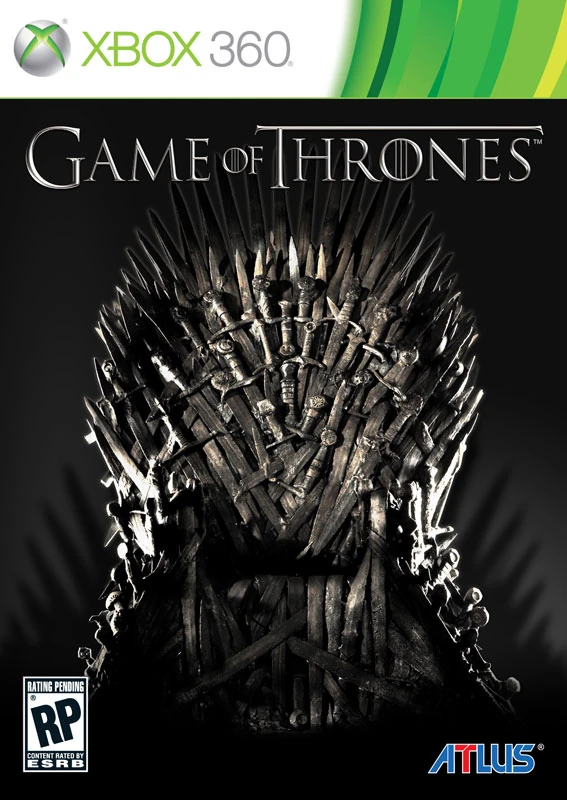
Resident Evil: Operation Raccoon City

OperationRaccoonCity.jpgResident Evil: Operation Raccoon City is a third-person shooter video game for Microsoft Windows, PlayStation 3 and Xbox 360, co-developed by Slant Six Games and Capcom. It was released on March 20, 2012 in North America, and scheduled for release on March 22, 2012 in Australia, March 23, 2012 in Europe and April 26, 2012 in Japan. It is part of the Resident Evil series, being set around the same time as Resident Evil 2 and Resident Evil 3: Nemesis titles, though it is a non-canon hypothetical scenario.

Plot

Umbrella Security Service (USS) Delta team enters the Raccoon City Underground Laboratory, where they meet up with Alpha team leader HUNK. Their mission is to assist Alpha team in stopping Dr. Birkin from handing over his T-Virus research to the U.S. military and retrieve the G-virus. On their way to Birkin's lab, they find Birkin has paid numerous Umbrella Biohazard Countermeasure Service (UBCS) mercenaries to work for him while the deal goes forward. When they reach Birkin's lab, the doctor is shot, and HUNK and another Alpha leave with the samples. They soon find that Birkin survived the attack and infected himself with the virus. The Birkin creature proceeds to kill off most of Alpha team before disappearing; HUNK offers to go back in search of the sample.
Not long after the battle, it becomes evident that the T-virus has leaked city-wide, and people are beginning to transform into flesh-hungry zombies. In what they see as a punishment by USS command, Delta team is ordered to remove evidence of Umbrella's role in the outbreak. Heading into Raccoon City Hall, Delta team meets with a UBCS mercenary and they monitor Nicholai Ginovaef; he is soon revealed as a traitor and attempts to kill Delta team.
Later, the team is sent out around Raccoon Park to find the Nemesis-T Type, which has gone rogue. A second parasite is injected into its body in order to bring it back under control. Shortly after this mission is completed, the team is then sent out to the Raccoon City Police Department, ordered to kill any surviving police officers and destroy evidence linking the company to the outbreak. When this is done, the team exits the station, and soon after encounter Leon S. Kennedy, whom they begin to hunt down along with Sherry Birkin. After they find and corner Leon, Claire Redfield and Sherry, the game can end in two ways: in one ending, the team resigns from Umbrella over their abandonment during the mission and betrays them by letting the three live; in the other, Leon and Claire are executed and Sherry is sent to an Umbrella facility.

Gameplay

There are twelve playable characters in the game, with six characters for each side. On the Umbrella Security Service team there is: Vector, the team's recon expert and is equipped with a cloaking ability; Beltway, who is proficient in the use of explosives; Bertha, the medic; Spectre, the marksman; Four Eyes, the scientist, with the ability to program the bio-organic weapons (BOWs); and Lupo, who is the team leader.On the United States Special Ops team there is: Willow is the recon expert; Dee-Ay is the team leader; Tweed is the demolitions expert; Harley is the medic; Shona is the field scientist; and Party Girl is the sniper.
Alongside the single player mode, the game also offers four-player co-operative Raccoon Mode, which pits the USS against the U.S. Special Ops teams.
The zombies in the game are able to attack the player in a multitude of ways. A zombie that gets too close to the player will usually attempt to grapple the player, prompting the player to rapidly shake his/her analogue stick to avoid getting bitten. Players who are unsuccessful in doing this will be infected for a limited amount of time. Whilst they are infected they gain small bonuses at the expense of a slowly depleting health bar. If a player is successfully bitten and later runs out of time after becoming infected, the player will lose control of their character and begin attacking their former teammates until killed, allowing the player to respawn. There are additional enemy types in the game besides zombies, such as Lickers, Hunters, and Cerberuses. Furthermore, the players are able to control them under certain circumstances.
Heroes Mode is an online multiplayer feature allowing to play characters such as Leon S. Kennedy, Claire Redfield, Jill Valentine and Carlos Oliveira, plus Ada Wong, HUNK, Nicholai Ginovaef and a new character, called Lone Wolf.
Xbox 360-exclusive Nemesis Mode allows one player to control Nemesis and use him to kill the other team.
Free DLC pack containing playable missions for Spec Ops arrives on April 10 for the Xbox 360 and the PS3.

Development

The idea for the game came about during the development of Lost Planet 2.On November 1, 2010, Kotaku reported on a rumor that Slant Six Games, developer of SOCOM: U.S. Navy SEALs Confrontation, was developing Resident Evil: Raccoon City. On its website, Slant Six Games wrote that it was currently developing "an amazing new project" that was unannounced, which was developed in conjunction with a "new publishing partner on a world class franchise."In March 2011, Masachika Kawata estimated the game to be 45% complete. According to Kawata, there were discussions on introducing new "bio-organic weapon" enemy creatures into the game.

Reception


Operation Raccoon City had a mixed critical reception; receiving a rating of 52% on reviews aggregation website Metacritic.Official Xbox Magazine gave it a score of 7/10, as a "satisfying blend of gunplay and teamwork."Destructoid said that the game "suffers from poor design...but that doesn't stop it from being a genuinely good time that should satisfy anybody looking for a hardcore romp." The Guardian said "It's important to bear in mind that it's best experienced multiplayer rather than solo. But it's great fun and adds a fresh spin to a key time and place in the Resident Evil universe."GameShark said: "Raccoon City isn't the next real Resident Evil game (though its improved controls do bode well for that game). Instead, it's a mostly solid third-person, cover-based shooter set in the same universe."
Some reviews were negative. IGN's review stated "An actual zombie outbreak would have been less tragic," calling the game "little more than a poor man's SOCOM and a destitute man's Resident Evil."GameSpot echoed these sentiments, stating that the game "is a frighteningly flawed action-heavy spin-off that withers in the shadow of its superior alternatives".GamesTM gave the game 3/10, criticising the team mate AI, glitches, and unimaginative set pieces after having played the single player mode[ They would revisit the game after its release to review online options, and largely came to the same conclusions, criticising the poor AI and mission design, although they did state that the game was better online than offline. Once again, they awarded the game 3/10. Eurogamer called it an "under-designed and under-produced nightmare...that delivers the bare minimum in every category."[GamesRadar summed up its review with "poor design choices, narrative missteps, and technical issues combine to make this one of the worst Resident Evil games to date." Game Informer ended their review with "Not even online play is enough of a reason to warrant checking out this botched experiment with the Resident Evil brand." Edge gave the game a 3 out of 10, concluding that "it’s hard to see what this distinctly low budget shooter has to offer beyond yet another return visit to already blood-saturated and well-trodden ground." Game Revolution even went as far as to say that the game hurt the Resident Evil brand name, and that the game "should never have had the Resident Evil name attached to it. It smacks of purely business-oriented decision-making. Players are guaranteed to walk into the store and see that name and expect something completely different. It's not fair to consumers and Resident Evil fans alike

Monday, 21 May 2012

Minecraft

Minecraft 1.2.5 Title Screen.png
Minecraft is a sandbox-building independent video game originally by Swedish creator Markus "Notch" Persson and now by his company, Mojang.
Minecraft is focused on creativity and building, allowing players to build constructions out of textured cubes in a 3D world. Gameplay in its commercial release has two principal modes: Survival, which requires players to acquire resources themselves and maintain their health and hunger; and Creative, where the player has an unlimited supply of resources, the ability to fly, and no concept of health or hunger. A third gameplay mode, named Hardcore, is essentially the same as Survival, but the difficulty is locked on the hardest setting and respawning is disabled, forcing the player to delete his or her world upon death. An outdated Classic version is also available for free, although it is no longer being developed. Creative Minecraft resembles Classic, but with many more features.
The gameplay is heavily inspired by Infiniminer by Zachtronics Industries, and Dwarf Fortress by Bay 12 Games.
Minecraft was released as an alpha on May 17, 2009,with a beta version on December 20, 2010. Official releases for iOS and Android have been released and the full version of the PC game was released on November 18, 2011 atMineCon 2011. The Android release was temporarily exclusive to the Xperia PLAY but is now available to the rest of the Android Market. A heavily stripped version of the game has been developed for the Xbox 360 by independent game developers 4J Studios, which was released on May 9th, 2012. Minecraft was developed for about a week before its public release on May 17, 2009, on the TIGSource forums, where it gained a considerable level of popularity. It has been continually updated and patched since then, and while it was still in alpha release, it garnered several hundred thousand sales and received critical notice and acclaim from many reviewers. It passed a million units sold on January 12, 2011, less than a month after reaching Beta. By February 18, 2012, the game had sold more than 5 million units.

Gameplay

A screenshot of a randomly generatedMinecraft terrain
A player in Minecraft has a lot of freedom to choose how to play the game, with the primary goals being surviving attacks by monsters (known in-game as "hostile mobs") and building shelter. The core gameplay revolves around construction. The game world is essentially made of cubes arranged in a fixed grid pattern which represent different materials, such as dirt, stone, various ores, water, and tree trunks. While the players can move freely across the world, objects and items can only be placed at fixed locations relative to the grid. The player can gather these material blocks and place them elsewhere, thus potentially creating various constructions.
Minecraft has three gameplay modes: Survival, Hardcore and Creative. Classic is the earliest free version and initially featured only the Creative game mode with only building (block placement and removal) aspects of the game and unlimited block supply. The game was then split into single-player survival mode (referred to as "Survival Mode Test"), which contained monsters and a much greater variety of blocks and items, as well as requiring players to mine their own blocks.
The game starts by placing the player on the surface of a virtually infinite procedurally generated game world. The player can walk across the terrain consisting of plains, mountains, caves, and various water bodies. The world is also divided intobiomes ranging from deserts to snowfields. The in-game time system follows a day and night cycle. Throughout the course of the game the player encounters various non-human creatures, referred to as mobs. During the daytime, non-hostile animals spawn, which can be hunted for food and crafting materials. Hostile mobs, such as large spiders, skeletons, zombies and the dangerous exploding Creeper only spawn in unlit areas like caves or during nighttime.
Complex systems can be built using the in-game physics engine with the use of primitive mechanical devices, electrical circuits and logic gates built with in-game material redstone. For example, a door can be opened or closed by pressing a connected button or stepping on a pressure plate. Similarly, larger and more complex systems can be produced, such as a working arithmetic logic unit – as used in CPUs.
The game world is procedurally generated as the player explores it. Although limits exist on vertical movement both up and down, Minecraft allows for an infinitely large game world to be generated on the horizontal plane, only running into technical problems when extremely distant locations are reached. The game achieves this by splitting the game world data into smaller sections, called "chunks", only created or loaded into memory when the player is nearby.

Modes

Survival

In this mode, the player has a health bar which is depleted by attacks from monsters, falls, or environmental damage, such as drowning or falling into lava. The player also has a hunger bar, which must be periodically refilled by eating various food (porkchops, bread, etc.) in-game. Armor can help mitigate damage from mob attacks, while weapons can be used to kill enemies and other animals. Health replenishes when the player has a full hunger bar or by playing on the easiest difficulty, where the health bar regenerates by itself. Upon dying, items in the player's inventory are dropped and the player is respawned at current spawn point, which by default is where the player started, but can be set by sleeping in in-game beds. The items can be recovered if reached before they despawn.
The player can acquire different resources and craft tools, weapons, armor, food, and various other items. By acquiring better resources, the player can make more effective items. For example, tools such as axes, shovels, or pickaxes, can be used to chop down trees, dig soil, and mine ores respectively, and tools made out of better resources (such as iron in place of stone) perform their tasks quicker and can be used more heavily before breaking. The game has an inventory system and the player is limited to the number of items they can carry, specifically, 36 spaces. The player can acquire experience points by killing mobs. Experience can then be spent on enchanting tools, armour and weapons. Enchanted items are generally more powerful, last longer, or have other special effects.
The player may also play in a Hardcore mode as a variant of Survival mode, differing primarily by being locked to the hardest gameplay setting and featuring permadeath – upon player character's death, their world is deleted.

Creative

In creative mode, the player does not take environmental or mob damage, is not affected by hunger, and can fly freely around the game world. The player also has access to unlimited resources or items through the inventory menu, and can place or remove them instantly. All creatures in the game, including hostile ones, may still spawn under proper conditions, but they cannot damage the player. The only possible way in Creative for a player to die is to fall down the Void, the bottom of the map.

Classic


A screenshot of Minecraft Classic (single player)
Older versions of Minecraft are also available for players. Unlike newer versions of Minecraft, Classic is free to play, though it is no longer updated. It functions much the same as Creative mode, allowing players to build and destroy any and all parts of the world either alone or in a multiplayer server. There are no computer creatures in this mode, and environmental hazards such as lava will not damage the player. However, some blocks function differently as their behavior was later changed during development. For example, in Classic mode, TNT will act like any other block and break when hit, but in newer versions it will detonate after its fuse is lit.

Primary win condition

Although Minecraft is mostly a sandbox game, it contains some adventure elements. And, with that, a primary win condition, which is achieved by traveling to another dimension known as The End and defeating the powerful Enderdragon that flies around the map. This dimension is also home to Endermen, a race of seemingly-sentient beings that are only rarely seen on the main world. To go to The End, one must locate underground ruins of an ancient civilization (referred to ingame as Strongholds) which can be found on the main overworld. They must then activate the stronghold's portal using items crafted from drops from Endermen and Blazes, which can be found in alternate dimension called The Nether.
Upon beating the boss creature (and claiming an exclusive reward consisting of a shower of experience points and the elusive Ender dragon egg), the player is allowed to leave the dimension via a portal, which will cue the game's ending sequence, written by Irish author Julian Gough, and credits roll. The player is then teleported back to their original spawn point in the overworld, and, if certain criteria are met, will receive the exclusive "The End" achievement.

Development

The developer of Minecraft, Markus Persson aka Notch, had previously worked on games such as Wurm Online and as a game developer for King.com for over four years. Minecraft development began in May 10, 2009, soon after Persson had quit his job at King.com in order to concentrate more on independent development. Persson was inspired to create Minecraft by several other games such as Dwarf FortressInfiniminer by Zachtronics Industries, and Dungeon Keeper by Bullfrog Productions. He was still working out the basics of gameplay when he discovered Infiniminer and played with others on the TIGSource.com forums. At the time, he had also been visualizing an isometric 3D building game that would be a cross between his inspirations and had made some early prototypes.After discovering Infiniminer, Notch declared "My god, I realized that that was the game I wanted to do". Infiniminer heavily influenced the style of gameplay that eventually resulted in Minecraft, including the first-person aspect of the game and the "blocky" visual style.

A screenshot of the Minecraft Beta crafting screen, showing a stone axe being crafted
Minecraft was first released to the public on May 17, 2009, as a developmental "alpha" release. Although Persson maintained a day job with Jalbum.net at first, he later moved to working part time and has since quit in order to work on Minecraft full time as sales of the beta version of the game have expanded. Persson continues to update the game with releases distributed to users automatically. Persson plans to continue these updates after the release of the full game as long as there is still an active userbase.These updates have included features such as new items, new blocks, an alternate "Hell" dimension (accessible through construction of a portal) that Persson terms "The Nether", tamable wolves that assist the player, and changes to the game's behavior (e.g., how water flows). Persson plans to eventually release the game as open-source after sales have dropped off and when he wants to move onto other projects.

A screenshot of "The Nether", an alternate dimension
In September 2010 Persson announced that he and a friend were starting a video game company, Mojang, with the money earned from Minecraft. This company was intended to back the development of Minecraft and an unrelated game, Scrolls, which his friend would primarily work on. As part of creating the company, Persson has hired "an artist, a web site developer, and a business guy", additional programmers, and established an office in Stockholm.Although Persson plans to spend the majority of his time working on Minecraft while his partner spends the majority of his time working on the other game, he says that "everyone working at the company will be involved in both projects to some degree".Persson said that part of his motivation behind hiring staff was that he felt he was spending too much time working on the website and reading emails rather than developing Minecraft.The four additional employees hired in 2010 were Jens Bergensten, a programmer; Daniel Kaplan, the "business guy"; Jakob Porser, who will be working on the other game for Mojang; and Markus "Junkboy" Toivonen, a pixel artist. The plans for Persson's new company were delayed by weeks when his account with PayPal, containing over US$763,000 in proceeds from Minecraft sales, was frozen due to a "suspicious withdrawal or deposit". On October 20, 2010, the official Minecraft website suffered a prolonged DDoS attack.
On December 11, 2010, Persson announced, via his personal blog, that Minecraft would be entering its beta testing phase on December 20, 2010, and that the price would increase to €14.95. He further stated that users who bought the game after this date would no longer be guaranteed to receive all future content free of charge as it "scared both the lawyers and the board." However, bug fixes and all updates leading up to and including the release would still be free. At the start of 2011 Mojang expanded to include Carl Manneh as a "managing director" and Tobias Möllstam as a programmer. On April 7, 2011, Persson made a post on his blog that Mojang has decided to move the game out of Beta on November 11, 2011; however this would not be the "finished product", as the game would be continuously updated before and after the release.
Minecraft.net provided online systems to authenticate logins and host the player's profile including its modifiable character skin pattern and the purchased gift codes. On January 18, 2011, Persson announced in a blog post that Minecraft's web servers would be switching to being hosted solely on the Amazon Web Services (AWS) content delivery network. Notch stated in his personal blog that their old web host was having trouble and that Mojang would be switching to using AWS as their host for both Minecraft.net and Minecraft's web functions such as logging in.This was followed by a tweet the next day confirming the migration and that Tobias would be the one to set up the new servers. Upon this hosting migration, both Minecraft.net and Minecraft game features experienced fluctuating down time.On February 21, Mojang hired Dan Frisk to oversee the servers and back end for both Minecraft and Scrolls.
On December 2, 2011, Persson announced via his personal blog that he would be stepping down as the lead developer of Minecraft, with Bergensten becoming lead developer. Persson would remain as a developer of Minecraft but would be taking time away from the game in order to work on an unannounced project. On February 28, 2012, Bergensten announced that the main developers of Bukkit, a community-based project that works on Minecraft server implementation, joined the ranks of the Mojang team to work on "improving both the server and the client to offer better official support for larger servers and server modifications".

Thursday, 17 May 2012

Far Cry 3


Far-cry-3-box-art-xbox-360.jpgFar Cry 3 is an upcoming open world first-person shooter video game being developed by Ubisoft Montreal in conjunction with Ubisoft MassiveUbisoft Reflections and Ubisoft Shanghai and published by Ubisoft for PlayStation 3Xbox 360 andMicrosoft Windows. It will be the sequel to 2008's Far Cry 2. The game is set for release on September 4, 2012 in North America and September 6 in Europe.
Far Cry 3 takes place on a tropical island found somewhere at the intersection of the Indian and Pacific Oceans.However, Patrick Redding, a Ubisoft story designer, mentioned that an Antarctic setting is a possibility for future games. The main goal of the game is to escape from the islands (as there will be more than one, mentioned by Dan Hay) and their crazed inhabitants.

Gameplay

On June 6, 2011, Ubisoft showcased the demo gameplay of Far Cry 3 in its E3 2011 conference. It was revealed that the player has the ability to shoot enemies behind objects in crouch mode without moving his head up but with free hands. The demo also revealed an overhauled stealth mechanic as well as a possible leveling system based on experience points. The player will also have the ability to perform "takedowns" by performing melee attacks from above or in crouch mode. The game's narrative director, Jason Vandenberghe said that the story mode map will be around ten times larger than its previous installments, indicating that it is still an open world sandbox game in which players bury heads. Still according to new gameplay uploaded throughout video sharing sites, it has been noted that the player will be given the ability to survey and plan out his attacks with stealth takedown combinations and also take pictures with his cameras. 
Plot
Far Cry 3 returns the series to a tropical island setting, similar to the first game and unlike the second game, which took place in an African savanna setting. Players will assume the role of protagonist Jason Brody, a tourist who has been stranded on an island chain in the grips of violent local conflict for years. Jason has been separated from his girlfriend and, in his search for her, developers have stated he will have to deal with a wide cast of mostly unstable characters who have been trapped on these islands for some time. In the short demo trailer that was the first footage released of the game in development, Jason interacts with one such character, named Vaas (voice, mocap and facial motion capture by Michael Mando), who gives an unsettling monologue about the nature of insanity before trying to drown Jason by anchoring him to a cinder block and throwing him into a natural pool of water that has clearly been used repeatedly for this purpose.
Early developer interviews provided little about Jason's backstory, aside from the fact that he possesses a strong skillset as a combatant and survivalist that give him a fighting chance in the desperate circumstances he constantly finds himself in during the events of the game.
More recent interviews have hinted at a change to the story in that Jason is now emphasized to be a man out of his element, with no particular training who just happens to be caught up in the island's chaos as he searches for his friends. At the same time, the story will try to invoke that after a time trapped on the island, it will start to have an effect on the protagonist, showing another side of Jason's personality, according to producer Dan Hay. Developers have also stated that the intended tone of the game will be one of realism and intensity and an attempt to invoke a visceral and constant feeling of danger in the player.
Sandbox
It has been confirmed that Far Cry 3 will feature a sandbox editor, just like previous Far Cry titles. And it will have "A fresh coat of paint. We are going to optimize it". It was stated in the 'Multiplayer Revealed and Map Editor confirmed!' video on Youtube, that it will be "Far Cry 2's map editor, but a lot bigger and a lot better". It has also been stated by a developer that there will not be vehicles.
Development
In August 2010, PC Gamer reported that development of Far Cry 3 was in "full swing" at Ubisoft Montreal.In the same month, GAME and Swedish retailer Webhallen listed the game for a 2010 release, which didn't happen. In January 2011, Ubisoft declined to comment on speculation that Far Cry 3 will be hitting shelves in October after Game Informer listed the game as an October arrival in its 2011 preview feature. In February, the Official PlayStation Magazinesuggested that the game was due for release at the end of 2011 as the following quote suggested, "Start taking the malaria medicine in preparation: Far Cry 3 could be arriving before the end of the year."[ This statement was withdrawn in next month's edition where it was stated that the game would be shown on 2011's E3 and that the release date would be bumped back to 2012. In May, the CVs of a couple of stuntmen listed Far Cry 3 as one of their previous projects. The first official walkthrough was released at the 2011 E3 conference on June 6, 2011.